
Cryptocurrency

Collapse
X
 
  • Time
  • Show
Clear All
new posts
  • Stephen
    Junior Member
    • Dec 2012
    • 19

    #1

    Cryptocurrency

    I am looking into playing in the cryptocurrency markets, especially Bitcoin. As Bitcoin becomes a mainstream currency, and as FRN fiat currency value declines due to deficit spending made possible by printing money (actually I think mostly they mostly just create it in computer now instead of actually printing it), I seek a means of storing value that can easily be stored, and liquidated.

    While looking for a cryptocurrency exchange to do business with I found that every exchange willing to do business with anyone in the USA requires Know Your Customer (KYC) information. I found this webpage that explains why:
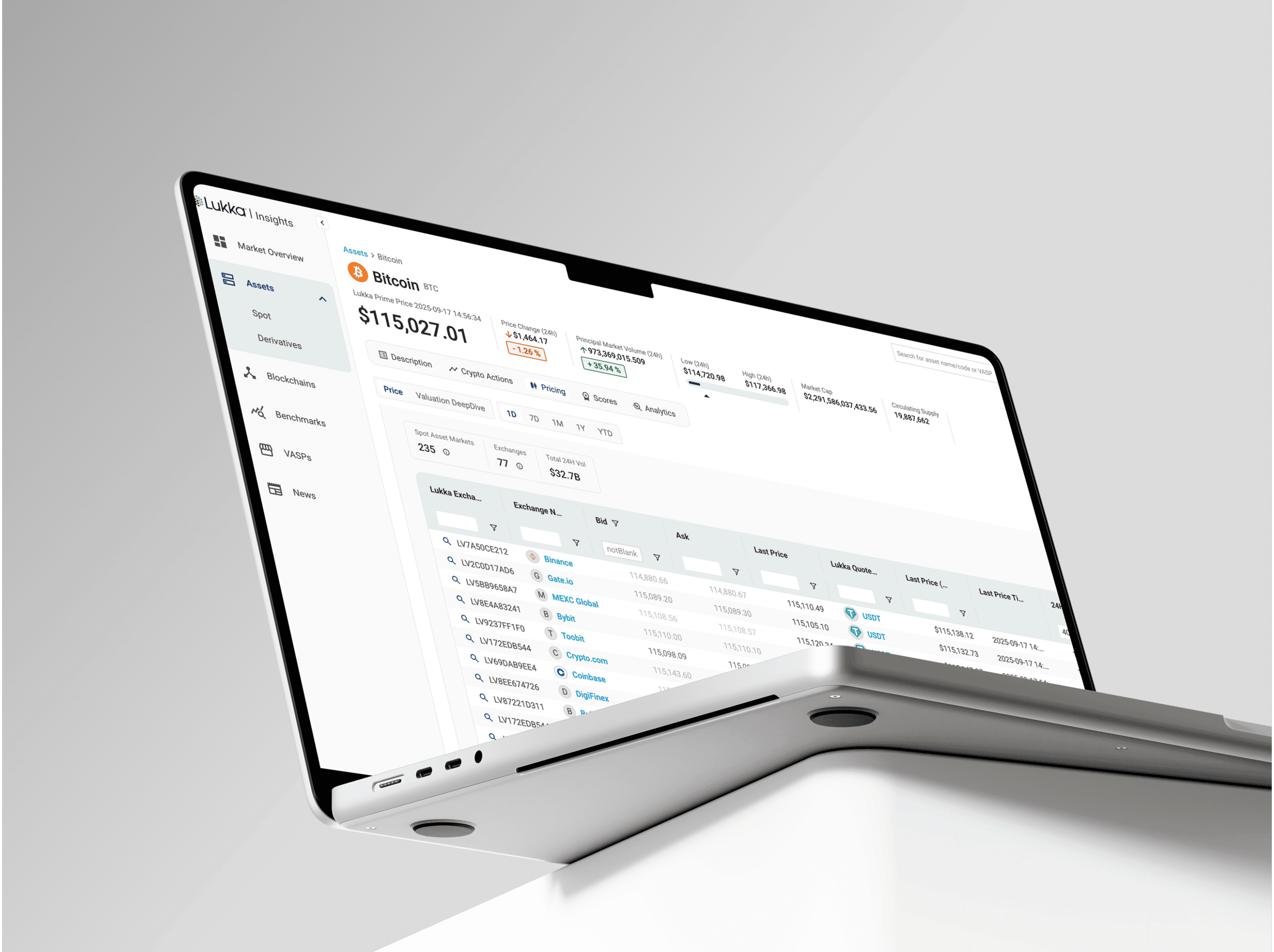
    Explore the latest insights with Lukka's thought leaders on crypto asset regulation, data, and blockchain with Lukka Insights. Learn more now.


    So once KYC information is given, and the exchange knows your wallet address, they will do currency transaction reports if the value stored in it reaches, or exceeds, 10,000 as measured in FRN, or if there are transactions that also meet, or exceed it. Profit, and loss, are reported to the IRS, and the IRS will expect taxes to be paid on it.

    Is there a way to trade in cryptocurrency that does not incur a tax liability? Does the IRS consider taxes are owed only when Bitcoin profits are exchanged directly for goods, and services, or converted to FRN?
    Last edited by Stephen; 03-03-21, 03:08 PM.
  • shikamaru
    Senior Member
    • Mar 2011
    • 1630

    #2
    Originally posted by Stephen View Post
    I am looking into playing in the cryptocurrency markets, especially Bitcoin. As Bitcoin becomes a mainstream currency, and as FRN fiat currency value declines due to deficit spending made possible by printing money (actually I think mostly they mostly just create it in computer now instead of actually printing it), I seek a means of storing value that can easily be stored, and liquidated.

    While looking for a cryptocurrency exchange to do business with I found that every exchange willing to do business with anyone in the USA requires Know Your Customer (KYC) information. I found this webpage that explains why:
    Explore the latest insights with Lukka's thought leaders on crypto asset regulation, data, and blockchain with Lukka Insights. Learn more now.


    So once KYC information is given, and the exchange knows your wallet address, they will do currency transaction reports if the value stored in it reaches, or exceeds, 10,000 as measured in FRN, or if there are transactions that also meet, or exceed it. Profit, and loss, are reported to the IRS, and the IRS will expect taxes to be paid on it.

    Is there a way to trade in cryptocurrency that does not incur a tax liability? Does the IRS consider taxes are owned only when Bitcoin profits are exchanged directly for goods, and services, or converted to FRN?
    I will express a viewpoint that maybe unpopular.

    One should partner with the IRS (and the US tax code) in order to profit. Leverage government to make you money.
    In the blockchain space, there are centralized exchanges and decentralized exchanges.

    As a US person (for tax purposes), there is no way to trade in cryptocurrency without incurring a tax liability. The US (and Eritrea) are the only countries in the world that tax their citizens' worldwide income.
    If a person wanted to exit the tax system, expatriation is a legal way to do this although you may still be subject to an exit tax.
    Taxes are owned as soon as "accession to income" occurs. Trading in crypto for profits, would be a capital gain. Short term capital gain tax rates are equivalent to earned income tax rates. The one positive on short term capital gain is that it is considered unearned income by the IRS, thus you avoid FICA taxes.

    My opinion, it is wiser to seek to reduce over time to eventually eliminate your tax bill. This will require some help from professionals for record keeping, reporting, as well as compliance with the US tax code.

    Comment

    • David Merrill
      Administrator
      • Mar 2011
      • 5954

      #3
      Originally posted by shikamaru View Post
      I will express a viewpoint that maybe unpopular.

      One should partner with the IRS (and the US tax code) in order to profit. Leverage government to make you money.
      In the blockchain space, there are centralized exchanges and decentralized exchanges.

      As a US person (for tax purposes), there is no way to trade in cryptocurrency without incurring a tax liability. The US (and Eritrea) are the only countries in the world that tax their citizens' worldwide income.
      If a person wanted to exit the tax system, expatriation is a legal way to do this although you may still be subject to an exit tax.
      Taxes are owned as soon as "accession to income" occurs. Trading in crypto for profits, would be a capital gain. Short term capital gain tax rates are equivalent to earned income tax rates. The one positive on short term capital gain is that it is considered unearned income by the IRS, thus you avoid FICA taxes.

      My opinion, it is wiser to seek to reduce over time to eventually eliminate your tax bill. This will require some help from professionals for record keeping, reporting, as well as compliance with the US tax code.
      Your opinion corresponds to my observations.

      Five years ago a retiring airline captain invested his six-figure refund heavily in cryptocurrency. He prompted a nasty bulldog IRS agent who was blatantly "breaking the law". I gained the distinct impression that he was involved in an MLM. The message he was getting was,
      If you want to withdraw all your cybercurrency, you must get 10 people in your Downline or limit your withdrawal to 10% of the total account balance."
      Something like that.

      I may have misinterpreted things though. His cybercurrency investment may have been safe, like a retirement plan, but only as long as he did not touch it. He could not withdraw it without the IRS seizing it from the cybercurrency account, as it was in transaction to his bank.

      Thank you for the outline. I do not trust it yet but it is a functional model. It is replacing the MLM model.


      P.S. Since you cannot eat gold, until you have reduced it to highward starfire anyway (manna => monatomic gold => Philosopher's Stone), and gold will collapse to $42.22/ounce which is going to feel like a solid crash to about everybody; the only peaceful place is redeeming your mind.

      I do not think, when cybercurrency will vanish if the power is pulled unplugged, that one can find peace in it. Treasuries globally are allowing the parliaments (Congress) to bond infinite money market fabrication of currency. So it is a Treasury Market. Treasuries are now the global money market.

      It is a bubble so big I feel I am the only man on earth who can see it.

      P.P.S. Since the metal has recently found its only value ever (aside from being a shiny distraction) in creating cybercurrency, try eating bits and qubits? Either scenario above, whichever one is correct or more correct, there is no accessing the cybercurrency with any ease.

      In Mr Robot there is a shadow government called White Rose and the Deus Group (100 Elite) with a Dark Army all in one abused child's schizoid alter ego. Do away with all that and the government behind the transactions building BlockChain securitization is the Investment Group - now including Stephen. The rogue agent who would badger and steal from the retired airline pilot was the Dark Army.
      Last edited by David Merrill; 03-03-21, 12:01 PM.
      www.lawfulmoneytrust.com
      www.bishopcastle.us
      www.bishopcastle.mobi

      Comment

      • shikamaru
        Senior Member
        • Mar 2011
        • 1630

        #4
        Originally posted by David Merrill View Post
        Your opinion corresponds to my observations.

        Five years ago a retiring airline captain invested his six-figure refund heavily in cryptocurrency. He prompted a nasty bulldog IRS agent who was blatantly "breaking the law". I gained the distinct impression that he was involved in an MLM. The message he was getting was,

        Something like that.

        I may have misinterpreted things though. His cybercurrency investment may have been safe, like a retirement plan, but only as long as he did not touch it. He could not withdraw it without the IRS seizing it from the cybercurrency account, as it was in transaction to his bank.

        Thank you for the outline. I do not trust it yet but it is a functional model. It is replacing the MLM model.


        P.S. Since you cannot eat gold, until you have reduced it to highward starfire anyway (manna => monatomic gold => Philosopher's Stone), and gold will collapse to $42.22/ounce which is going to feel like a solid crash to about everybody; the only peaceful place is redeeming your mind.

        I do not think, when cybercurrency will vanish if the power is pulled unplugged, that one can find peace in it. Treasuries globally are allowing the parliaments (Congress) to bond infinite money market fabrication of currency. So it is a Treasury Market. Treasuries are now the global money market.

        It is a bubble so big I feel I am the only man on earth who can see it.

        P.P.S. Since the metal has recently found its only value ever (aside from being a shiny distraction) in creating cybercurrency, try eating bits and qubits? Either scenario above, whichever one is correct or more correct, there is no accessing the cybercurrency with any ease.

        In Mr Robot there is a shadow government called White Rose and the Deus Group (100 Elite) with a Dark Army all in one abused child's schizoid alter ego. Do away with all that and the government behind the transactions building BlockChain securitization is the Investment Group - now including Stephen. The rogue agent who would badger and steal from the retired airline pilot was the Dark Army.
        I really like how you think way outside the box, David.

        Consider this:

        Money has to be stored (stock variable) somewhere.
        There is a way to create liquidity (flow variable) from an account (stock variable) or asset (stock variable) without drawing upon it.
        Answer: You borrow against the account (stock) or asset (stock) in order to access liquidity (flow).
        Debt, in most cases although there are exceptions, is not taxed.

        There is even a strategy out here titled, "buy, borrow, die" as a way to access liquidity while avoiding tax.

        A person can reduce, defer, cover, or even eliminate their tax within the system, legally. It takes some knowledge, assistance, and a bit of creativity in which to do this.

        But for most people, they would need to get a handle on their debt, interest expenses, and cash flows first ....
        Last edited by shikamaru; 03-03-21, 12:49 PM.

        Comment

        • Stephen
          Junior Member
          • Dec 2012
          • 19

          #5
          So, I thought there was this great alternative to fiat FRN. One that no government could manipulate the supply of, and so one that cannot be diluted, and devalued, by Modern Monetary Theory. But now I see that to use it is to be subject to government surveillance, and taxation.

          A very large percentage of merchants accept BitCoin as payment. This number is expanding. I foresee the day when there will be a rising number merchants who accept only BitCoin, or other crypto, until finally any who accept fiat currency will be hard to find. At that point the fiat currencies will fail, and along with that failure, so would fail any anti-tax movement based on Lawful Money.

          Comment

          • shikamaru
            Senior Member
            • Mar 2011
            • 1630

            #6
            Originally posted by Stephen View Post
            So, I thought there was this great alternative to fiat FRN. One that no government could manipulate the supply of, and so one that cannot be diluted, and devalued, by Modern Monetary Theory. But now I see that to use it is to be subject to government surveillance, and taxation.

            A very large percentage of merchants accept BitCoin as payment. This number is expanding. I foresee the day when there will be a rising number merchants who accept only BitCoin, or other crypto, until finally any who accept fiat currency will be hard to find. At that point the fiat currencies will fail, and along with that failure, so would fail any anti-tax movement based on Lawful Money.
            It is a contender as currency, however, government is not about to let its subjects escape their "inland revenue".
            Government will find a way to assert itself in the crypto space.
            Corporations are creatures of government and banks are instrumentalities of government. They will be brought to heel by government whichever way government wants them to go.

            Comment

            • David Merrill
              Administrator
              • Mar 2011
              • 5954

              #7
              Originally posted by shikamaru View Post
              It is a contender as currency, however, government is not about to let its subjects escape their "inland revenue".
              Government will find a way to assert itself in the crypto space.
              Corporations are creatures of government and banks are instrumentalities of government. They will be brought to heel by government whichever way government wants them to go.
              I have been instructing the suitors on the brain trust that the question is optional. Just leave it blank.

              Click image for larger version

Name:	1040 Page 1 Virtual Currency highlighted.jpg
Views:	1
Size:	697.9 KB
ID:	45132
              www.lawfulmoneytrust.com
              www.bishopcastle.us
              www.bishopcastle.mobi

              Comment

              • Stephen
                Junior Member
                • Dec 2012
                • 19

                #8
                If one had been dealing in cryptocurrency in that form's tax year what difference would leaving it blank make?

                According to theory FRN is taxable because the tax on it is interest paid on a notes of debt that are the FRNs. Once the FRN is converted to Lawful Money by means of non-endorsement statement on a paper check, or statement made on the account's signature card, the deposit is not taxable. Cryptocurrency is also not a debt note. So wouldn't that mean paying taxes on it is no more taxable than Lawful Money is, most especially if a way is found to make sure that proceeds of any sale of it is deposited into a bank account as Lawful Money?
                Last edited by Stephen; 03-09-21, 07:03 PM.

                Comment

                • shikamaru
                  Senior Member
                  • Mar 2011
                  • 1630

                  #9
                  Originally posted by Stephen View Post
                  If one had been dealing in cryptocurrency in that form's tax year what difference would leaving ti blank make?

                  According to theory FRN is taxable because the tax on it is interest paid on a notes of debt that are the FRNs. Once the FRN is converted to Lawful Money by means of non-endorsement statement on a paper check, or statement made on the account's signature card, the deposit is not taxable. Cryptocurrency is also not a debt note. So wouldn't that mean paying taxes on it is no more taxable than Lawful Money is, most especially if a way is found to make sure that proceeds of any sale of it is deposited into a bank account as Lawful Money?
                  Concerning leave the question blank, that is a good point/question.
                  My question is what are the consequences of leaving the question blank? A person is being asked to inform on themselves followed by signing the jurat under penalty of perjury. Perjury being a criminal offense. Pains and penalties ...
                  Perjury being the intentional act of swearing a false oath of falsifying an affirmation concerning matters material to an official proceeding.

                  Government has since time immemorial assumed (and exercised) the power to lay imposts, levies, and excises.
                  Whether the currency is two-name paper (Federal Reserve Notes) or gold and silver coin is irrelevant in my opinion.
                  Last edited by shikamaru; 03-05-21, 01:06 PM.

                  Comment

                  • David Merrill
                    Administrator
                    • Mar 2011
                    • 5954

                    #10
                    Originally posted by shikamaru View Post
                    Concerning leave the question blank, that is a good point/question.
                    My question is what are the consequences of leaving the question blank? A person is being asked to inform on themselves followed by signing the jurat under penalty of perjury. Perjury being a criminal offense. Pains and penalties ...
                    Perjury being the intentional act of swearing a false oath of falsifying an affirmation concerning matters material to an official proceeding.

                    Government has since time immemorial assumed (and exercised) the power to lay imposts, levies, and excises.
                    Whether the currency is two-name paper (Federal Reserve Notes) or gold and silver coin is irrelevant in my opinion.
                    We have two distinct categories now, recognized by Congress.
                    • member state banks
                    • non-member state banks


                    Non-member state banks can use Federal Reserve notes. However as non-members we are redeemed. Many of us simply redeem lawful money but a large number of us are redeemed in our attention. We no longer attend the altar at which debt is serviced.

                    If you were a city dweller in a rocky desert you would have a metal carrying hat for the coals. After you paid up at the temple the priest would heap hot coals on your head. You would take them home to warm your meal. Paying up might just mean that you participate in the displacement hysteria - like charismatic rapture eschatology. When you get around enough people who believe you start to think that it is true.

                    When your mind is redeemed then you begin to see.

                    The money with which you purchase the cybercurrency, or not, like me is not taxable income. One reports that in just that manner. Include the W-2 Form from your employer. You paid the premiums. There is the reported income subtracted from taxable income. You are outside the scope of the Internal Revenue Code. This is why if the IRS delays sending your refund, they include the interest and penalties.

                    But they can try. It may seem rude that they take advantage of people who are conditioned to the hysteria:

                    Click image for larger version

Name:	IRS Letter interest taxable reporting.jpg
Views:	1
Size:	579.0 KB
ID:	45133

                    It is... rude. Taxable interest, my ass.

                    But you can parse it out that way. It is interest accrued by the IRS for delaying payment in refund of non-taxable income. Go figure.
                    www.lawfulmoneytrust.com
                    www.bishopcastle.us
                    www.bishopcastle.mobi

                    Comment

                    • shikamaru
                      Senior Member
                      • Mar 2011
                      • 1630

                      #11
                      Originally posted by David Merrill View Post
                      • member state banks
                      • non-member state banks
                      There is a third, although this works within the system. That is privatized banking.

                      Taxes and interest are involved, but with appropriate usage of one's privatized banking system, you should be able to bring down the costs of taxes and interest.

                      It seems with the wealthy, they shift from money from income to money from debt.

                      Comment

                      • David Merrill
                        Administrator
                        • Mar 2011
                        • 5954

                        #12
                        Originally posted by shikamaru View Post
                        There is a third, although this works within the system. That is privatized banking.

                        Taxes and interest are involved, but with appropriate usage of one's privatized banking system, you should be able to bring down the costs of taxes and interest.

                        It seems with the wealthy, they shift from money from income to money from debt.
                        I think that line is drawn at qualifying for FDIC.

                        If you are wealthy enough to bond yourself, for your lending practices you are a knowingly privatized bank. If you do not know that the depreciation of your stock certificates (inflation) is intended to be compensated by your collection of usury then you are a member state bank without knowing you are a bank, at all.

                        Almost everybody endorsing private credit from the Fed misses that point altogether.
                        www.lawfulmoneytrust.com
                        www.bishopcastle.us
                        www.bishopcastle.mobi

                        Comment

                        • shikamaru
                          Senior Member
                          • Mar 2011
                          • 1630

                          #13
                          Originally posted by David Merrill View Post
                          I think that line is drawn at qualifying for FDIC.

                          If you are wealthy enough to bond yourself, for your lending practices you are a knowingly privatized bank. If you do not know that the depreciation of your stock certificates (inflation) is intended to be compensated by your collection of usury then you are a member state bank without knowing you are a bank, at all.

                          Almost everybody endorsing private credit from the Fed misses that point altogether.
                          Interesting use of the term, bond.

                          From the wikipedia page on margin (finance):

                          The collateral for a margin account can be the cash deposited in the account or securities provided, and represents the funds available to the account holder for further share trading. On United States futures exchanges, margins were formerly called performance bonds.
                          A performance bond can also be known as a surety bond. Now, we are in the land of the law of sureties.

                          Also concerning performance bonds:

                          The term is also used to denote a collateral deposit of good faith money, intended to secure a futures contract, commonly known as margin.
                          Good faith money is also known as earnest penny, Arles penny, or God's silver (in Latin Argentum Dei) ... an offering or token used to bind a bargain.

                          Now that I think more about it, one's estate of their worldly possessions or one's property (collateral) acts as a "performance bond" to one's debts bound therein.

                          FDIC, sureties, performance bonds, collateral .... all have to do with risk management and transference.
                          Last edited by shikamaru; 03-07-21, 02:04 PM.

                          Comment

                          • lorne
                            Banned
                            • Apr 2015
                            • 310

                            #14
                            Originally posted by shikamaru View Post
                            Concerning leave the question blank, that is a good point/question.
                            My question is what are the consequences of leaving the question blank?
                            I guess you skipped class the day we talked of this; over here.

                            I demonstrated that there is no consequence. I left it blank last year yet still received my lawful money tax refund. No problem.

                            Also, I have never been taxed on my cryptocurrency transactions. While there are AML/KYC rules at the fiat/crypto exchanges (the entrance & exit ramps), once you have the crypto you can transact directly without the banking system. And of course AML/KYC rules are not a problem for the redeemed (who redeem lawful money). No reporting, no Federal Reserve, no taxable income.

                            Click image for larger version

Name:	DSC_0706.JPG
Views:	3
Size:	289.7 KB
ID:	44109

                            Comment

                            • David Merrill
                              Administrator
                              • Mar 2011
                              • 5954

                              #15
                              Originally posted by lorne View Post
                              I guess you skipped class the day we talked of this; over here.

                              I demonstrated that there is no consequence. I left it blank last year yet still received my lawful money tax refund. No problem.

                              Also, I have never been taxed on my cryptocurrency transactions. While there are AML/KYC rules at the fiat/crypto exchanges (the entrance & exit ramps), once you have the crypto you can transact directly without the banking system. And of course AML/KYC rules are not a problem for the redeemed (who redeem lawful money). No reporting, no Federal Reserve, no taxable income.

                              [ATTACH=CONFIG]5023[/ATTACH]
                              Thank you for the photo:

                              Click image for larger version

Name:	BitCoin Redeemed.JPG
Views:	3
Size:	289.7 KB
ID:	45135

                              It looks more fun than day trading!

                              Your experienced perspective agrees with my thoughts about the privacy. It also seems in alignment with withdrawal of retirement savings (401K). You agree to take on any liabilities and release the financial institution.

                              Redemption is great!

                              The true objective is redemption of mind.
                              www.lawfulmoneytrust.com
                              www.bishopcastle.us
                              www.bishopcastle.mobi

                              Comment

                              Working...
                              X