A regular deposit of lawful money.

Collapse
X
 
  • Time
  • Show
Clear All
new posts
  • RThomas
    Member
    • Mar 2011
    • 52

    #91
    David,

    Thank you again for your time. This one will be involved in life for a few days but will come back to this thread.

    Anthony,

    We are up to two, fantastic. Same to you as stated above to David.

    Have a good weekend.

    RThomas

    Comment

    • David Merrill
      Administrator
      • Mar 2011
      • 5962

      #92
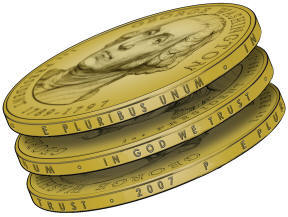
      Kudos for addressing the banker's legal business. I have just been attending proving the demand for lawful money to this point. I have something to add soon as I get one in my hand though... I hear the new Washington $1 coins do not say IN GOD WE TRUST, which is against the law. I am thinking Monday to go get one at the Post office - two actually, I pocket one for evidence and then show the Postal Inspector that it is a crime. More on this Monday.
      www.lawfulmoneytrust.com
      www.bishopcastle.us
      www.bishopcastle.mobi

      Comment

      • stoneFree

        #93
        if you're referring to the Presidential 1 dollar coin series begun in 2007, then yes, the inscription IN GOD WE TRUST appears on the edge. Or at least it should have, apparently some coins were released without the lettering, in error.

        Edge errors

        Not long after the first 2007 George Washington Presidential dollars were released into circulation in February 2007, collectors, dealers and the general public began reporting numerous edge errors. The date, Mint mark and mottoes IN GOD WE TRUST and E PLURIBUS UNUM should appear on the edges of the Presidential dollars. The edge inscriptions on circulation-quality coins are added in a step separate from and following the striking of the obverse and reverse sides.

        The most prevalent form of edge error on the Washington dollar coins is the missing edge lettering. Coins from both the Philadelphia Mint and Denver Mint were struck and shipped to the counting and bagging stations without being fed into the edge-lettering equipment.
        http://www.coinworld.com/error-and-variety-coins/

        Comment

        • David Merrill
          Administrator
          • Mar 2011
          • 5962

          #94
          Cool! Then the fellow who refused to accept one (article) turned away a valuable collector coin?


          Thanks!!


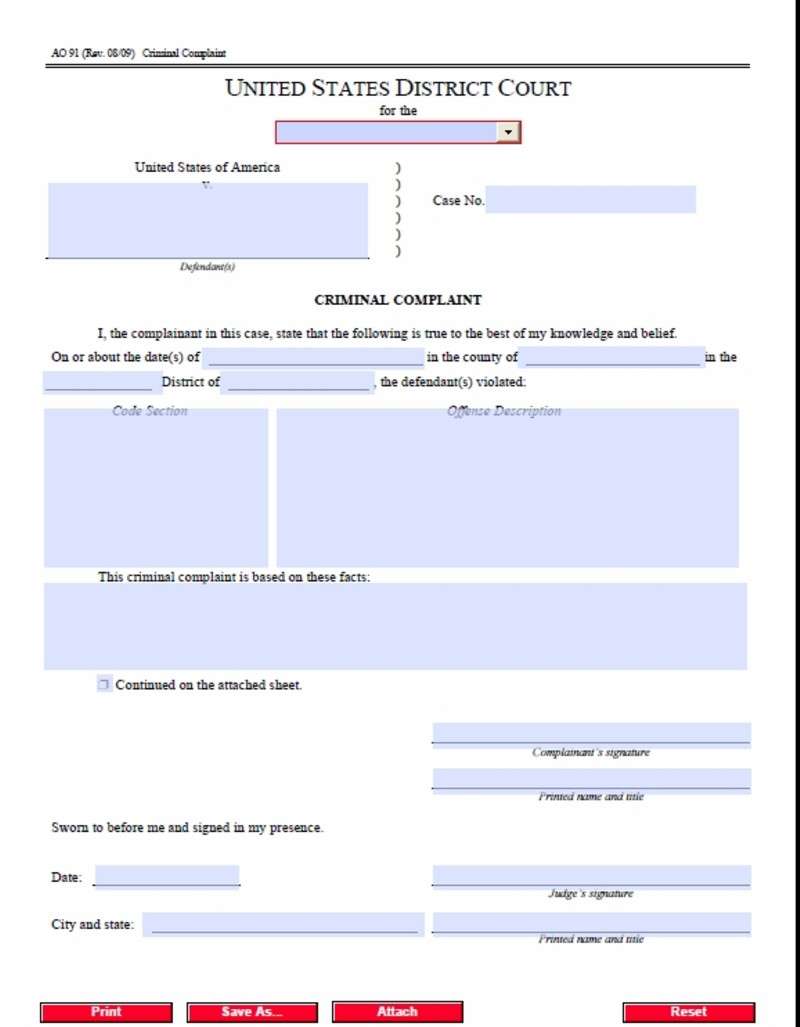
          What I was talking about though - if you find the banker in violation of law you might consider application of this Form. I have not acquired any direct (suitor) experience with this except one district court magistrate voiced an order...


          Looking carefully though; Document #113? This is a slush case for documents that fail to be clear which case they are to be filed in. The magistrate is coercing the use of that file category for one thing. Another thing is that it does not specify on the Form that this form is only for federal prosecutors to use.

          Time will tell us though, as we are in process of testing the form. It looks like anybody can take responsibility in front of a federal judge and any judge (not magistrate) denying that right, to be a private attorney general at the least, would be in violation of right. The main support for this is that the magistrate fails to cite any statute or code to support the assertion. Additionally magistrates cannot make dispository decisions and this is definitely a criminal case disposition. Only a judge can make this kind of decision but magistrates can make a decision like the one coerced here; to return a document that is unclear about which case it is to be filed in. However the Criminal Complaint was quite clear about the Case #.


          Regards,

          David Merrill.
          Last edited by David Merrill; 09-11-11, 01:35 AM.
          www.lawfulmoneytrust.com
          www.bishopcastle.us
          www.bishopcastle.mobi

          Comment

          • stoneFree

            #95
            Yes, valuable collector coin. More background info contained in this article: Mint police officer pleads guilty to coin theft:
            By my estimate, this thief alone was responsible for release of about 50,000 "Godless dollars."

            Comment

            • doug555
              Senior Member
              • Apr 2011
              • 418

              #96
              Does "lawful money" confer legal title as well equitable title when one demands it?

              If yes, then shouldn't we also demand "special deposit" on the restrictive endorsement on, for example, a payroll check (and also on bank signature card), so that one retains legal title (ownership) of the substance/labor that it represents, and that bank only gets equitable title (use) while it is in their possession?

              Unless we retain legal title, how can ever truly pay for and have legal title of the goods/services those funds are exchanged for?

              My point and belief is that we should add the phase "special deposit" to the non-endorsement wording, for example:

              "Special deposit and lawful money per 12 USC 411 are demanded for all transactions."


              Using "special deposit" invokes trust law and equity, which is something that I believe is needed for enforcement of our "unalienable rights" ("Black's 4th: rights that cannot be sold or transferred").

              This needs more research, and perhaps the senior members here can provide more insight on this...

              Comment

              • David Merrill
                Administrator
                • Mar 2011
                • 5962

                #97
                Originally posted by doug555 View Post
                Does "lawful money" confer legal title as well equitable title when one demands it?

                If yes, then shouldn't we also demand "special deposit" on the restrictive endorsement on, for example, a payroll check (and also on bank signature card), so that one retains legal title (ownership) of the substance/labor that it represents, and that bank only gets equitable title (use) while it is in their possession?

                Unless we retain legal title, how can ever truly pay for and have legal title of the goods/services those funds are exchanged for?

                My point and belief is that we should add the phase "special deposit" to the non-endorsement wording, for example:

                "Special deposit and lawful money per 12 USC 411 are demanded for all transactions."


                Using "special deposit" invokes trust law and equity, which is something that I believe is needed for enforcement of our "unalienable rights" ("Black's 4th: rights that cannot be sold or transferred").

                This needs more research, and perhaps the senior members here can provide more insight on this...
                Albeit food for thought; my first reaction is that the special deposit demand is inherent in the demand for lawful money. Here we are getting into the banker's business and I am not against that. I am just not really that concerned.

                But my first notion on it is that all customers at a certain bank would have their deposited bills together, all on the same ledger. The only difference between the special deposit demand and not would be that when you made a withdrawal you might be getting bills from another customer there who demands lawful money when he makes a paycheck deposit.
                www.lawfulmoneytrust.com
                www.bishopcastle.us
                www.bishopcastle.mobi

                Comment

                • Michael Joseph
                  Senior Member
                  • Mar 2011
                  • 1596

                  #98
                  Originally posted by David Merrill View Post
                  Albeit food for thought; my first reaction is that the special deposit demand is inherent in the demand for lawful money. Here we are getting into the banker's business and I am not against that. I am just not really that concerned.

                  But my first notion on it is that all customers at a certain bank would have their deposited bills together, all on the same ledger. The only difference between the special deposit demand and not would be that when you made a withdrawal you might be getting bills from another customer there who demands lawful money when he makes a paycheck deposit.
                  In my opinion, A SPECIAL DEPOSIT invokes a Trust Relationship with the Banker such that the banker must hold with great care "in trust" the special nature of the deposit. Banker is Trustee of the Trust Account for the benefit of FIRST MIDDLE LAST [Estate].

                  In other words the funds cannot be co-mingled with other funds. For example, if you were to make a demand for Lawful Money and then deposit the instrument on account, then that deposit could be co-mingled with other types of moneys. And, therefore, the banker is in no way estopped from Fractional Reserve practices when a GENERAL DEPOSIT is created.

                  Therefore, in my opinion, either just Cash the Check and hold the notes without the banking system, or create a SPECIAL DEPOSIT account. The first option seems the most logical; however, with the recent PUSH by the banking establishment to put DEBIT cards in the hands of the Acct. Holders, I think the system is pushing hard towards an electronic means of exchange. Therefore, a SPECIAL DEPOSIT Trust Account may be prudent.

                  Fee Simple is Absolute Title.
                  Last edited by Michael Joseph; 09-13-11, 04:18 AM.
                  The blessing is in the hand of the doer. Faith absent deeds is dead.

                  Lawful Money Trust Website

                  Divine Mind Community Call - Sundays 8pm EST

                  ONE man or woman can make a difference!

                  Comment

                  • David Merrill
                    Administrator
                    • Mar 2011
                    • 5962

                    #99
                    Originally posted by stoneFree View Post
                    Yes, valuable collector coin. More background info contained in this article: Mint police officer pleads guilty to coin theft:

                    By my estimate, this thief alone was responsible for release of about 50,000 "Godless dollars."

                    I went to the post office for some Washington coins and the clerk was a bit baffled. The article I read was change made at the post office so somehow I thought...

                    I went next door to the bank. The pudgy security guard was quite amicable, even holding the door. I found the teller window and wanted to buy a $20 roll of the Washington Dollars, taking my chances maybe one would have a blank edge. The teller only had the current Dollars featuring President HAYES - in $25 rolls. I looked it over in the roll and the IN GOD WE TRUST is very small but on the bottom under the bust. I decided to buy a roll anyway...

                    She got on her computer and wanted my full legal name.

                    I am not giving you any information to buy coins.

                    You are not a customer here are you?

                    No.

                    We need to have your personal information for every single transaction.

                    She gave me back my $30 in bills marked lawful money and I walked out past the security guard, who was still very friendly. I stopped briefly to set up lunch and chess. My call did not go through but the security guard came out a moment after me and glared very suspiciously. I gave him a friendly, Good bye but he did not warm up at all.


                    Originally posted by Michael Joseph View Post
                    In my opinion, A SPECIAL DEPOSIT invokes a Trust Relationship with the Banker such that the banker must hold with great care "in trust" the special nature of the deposit. Banker is Trustee of the Trust Account for the benefit of FIRST MIDDLE LAST [Estate].

                    In other words the funds cannot be co-mingled with other funds. For example, if you were to make a demand for Lawful Money and then deposit the instrument on account, then that deposit could be co-mingled with other types of moneys. And, therefore, the banker is in no way estopped from Fractional Reserve practices when a GENERAL DEPOSIT is created.

                    Therefore, in my opinion, either just Cash the Check and hold the notes without the banking system, or create a SPECIAL DEPOSIT account. The first option seems the most logical; however, with the recent PUSH by the banking establishment to put DEBIT cards in the hands of the Acct. Holders, I think the system is pushing hard towards an electronic means of exchange. Therefore, a SPECIAL DEPOSIT Trust Account may be prudent.

                    Fee Simple is Absolute Title.
                    I agree stipulating that if you demand lawful money your bills are a pooled special deposit. It is illegal to consider your funds as reserve for fractional lending but they may be pooled into deposits with other customers of that bank that demand lawful money.
                    www.lawfulmoneytrust.com
                    www.bishopcastle.us
                    www.bishopcastle.mobi

                    Comment

                    • doug555
                      Senior Member
                      • Apr 2011
                      • 418

                      #100
                      Is it our duty to preserve the legal title to the Birthright?

                      Originally posted by doug555 View Post
                      Does "lawful money" confer legal title as well equitable title when one demands it?

                      If yes, then shouldn't we also demand "special deposit" on the restrictive endorsement on, for example, a payroll check (and also on bank signature card), so that one retains legal title (ownership) of the substance/labor that it represents, and that bank only gets equitable title (use) while it is in their possession?

                      Unless we retain legal title, how can ever truly pay for and have legal title of the goods/services those funds are exchanged for?

                      My point and belief is that we should add the phase "special deposit" to the non-endorsement wording, for example:

                      "Special deposit and lawful money per 12 USC 411 are demanded for all transactions."


                      Using "special deposit" invokes trust law and equity, which is something that I believe is needed for enforcement of our "unalienable rights" ("Black's 4th: rights that cannot be sold or transferred").

                      This needs more research, and perhaps the senior members here can provide more insight on this...

                      I believe we have a duty to preserve the legal title to the Birthright, not only of our own personal birthright, but the Birthright & Blessing granted to Abraham, Isaac, and Jacob, and finally, by Jacob to Joseph's 2 sons, Ephraim and Manasseh (Gen 48).

                      Ps 24.1 states that "The earth is the Lord's, and all it contains, The world and those who dwell in it." He is the ultimate Owner of all, and in Genesis 2:15 He told man to "keep it".

                      I believe we were appointed trustees to keep the legal title (ownership/responsibility/liability), and if we do "general deposits" that gives the banks legal title to the funds that represent our (the Father's) labor, putting us in breach of trust of the original Birthright granted in the Garden of Eden (earth), and also the special Birthright/Blessing granted to Abraham's descendants - which I believe we are today in America, as the tribe of Manasseh. Recommended book

                      So, we need to preserve the chain of legal title from the Beginning in Genesis as Man, and as His People today. Demanding "special deposit" fulfills that responsibility because we retain legal title thereby.

                      It remains to be seen if there will be opposition to this. If this is all about a worldwide battle over the ownership of The Birthright, I imagine there will be.

                      But it appears from Eccl 12:7 that the Creator gave the spirit to Man at birth, and who can dispute that I, the spirit in man (1 Cor 2:11), as the recipient of that gift, was the first entity to give labor (in the "labor/delivery" room) to deliver to this world this body that I am in and animate, by the grace of the Creator, and therefore I have a priority lien and interest on all this body produces, and for which I am trustee to The Eternal Father of all. So I have perfect title to this body and its proceeds, both legal and equitable title. This is "among" the unalienable rights mentioned in the Declaration of Independence, I believe.

                      So perhaps we can utilize the "freedom of religion" beliefs "card" to assist us in enforcing the "special deposit" demand on the non-indorsement stamp, if we encounter resistance. Perhaps we can draw up and publish a Declaration and Affidavit on this "birthright" to "lawful money" and its ownership preservation by "special deposit" in order to maintain our unalienable rights to "Life, Liberty, and the Pursuit of Happiness".

                      Again, this is for discussion and guidance from the senior members here.
                      Last edited by doug555; 09-14-11, 11:39 PM.

                      Comment

                      • RThomas
                        Member
                        • Mar 2011
                        • 52

                        #101
                        [QUOTE=Anthony Joseph;4419]Well, I think we can agree on another point: I have no faith in the actual paper or it's sustaining value over time. That would be misguided trust in a man made system when that system's currency was created to lose value over time (fractional reserve lending - improper and false balances).

                        US Notes are lawful money and also fiat. So your definition of what lawful money is does not coincide with the law regarding these notes. US Notes are NOT issued by the Federal Reserve and therefore NOT subject to any of the rules, regulations, obligations or liabilities including the RETURN OF INCOME REQUIREMENT associated with the endorsed use of the FED's private credit and currency. If "They shall redeemed in lawful money..." means any lawful money than US Notes fit that "bill" (pun).

                        Your definition of lawful money (i.e. US currency notes and coins) does not fit ‘their’ definition as stated in the coinage act of 1965 and ‘their’ subsequent act in 1983 (Pub. L. 97-258). These acts reduced the status of your ‘redeemed US notes’ to mere legal tender which is not the same as lawful money or even a representation of lawful money. They have been brought down to the same status as FRNs with no title conveyed. They can in deed be fiat ‘money’ if one subjects to a blind trust in ‘them.’ Why would one accept a representation of ‘lawful money’ that is still subject to the acts of the one issuing it?


                        Your point that only a "Federal Reserve Bank" is able to use FRNs and are therefore be subject to the code and ACT thereof, is true. However, you do not see the subtlety and obfuscation of the system that treats ANYONE who signature endorses the FED's private credit on the back of their paychecks as a Federal Reserve Bank. How else could they incur the tax liability associated with the Federal Reserve's "money system"? Unfortunately for most, the privilege of use of private credit results in one being treated as a "FED BANK" by being subject to RETURN OF INCOME liability as opposed to other sanctioned "FED BANKS" (any bank that has an account with the FED) who gain the most profit from that use by lending upon usury and fractional reserve banking. The FED doesn't care about Joe Sixpack's incompetence or complacency in that regard; if you don't profit as much as others... tough PAY ME MY TAX!


                        Techincally, if one forms and keeps the full and accurate record of one's demand for lawful money, the notes they hold should hold their value in the sense that they should be treated as US Notes being on par with the $42.22/oz gold being earmarked by the Treasury at that value on the WORLD BANK/IMF's international market. Do I have faith in that recognition by those who are bound by law to recognize that? NO. I have no faith in any paper as having or sustaining value over time. My only faith is in the Ever-living Creator above who is in total control and provides the ability to be redeemed to anyone who truly desires it. It matters not what the situation or circumstances are created by men; His sons and daughters have redemption waiting and available when they choose to accept that gift. Redemption translates in many ways, in my view, according to the times one lives in.

                        ‘Should be.’ are words that this one can only see as a projection (or as you say via post #85 an offer/promotion of belief). If as you offer and promote that such ‘redeemed money’ is on par with gold as measured in dollars (one dollar equals 1oz/ 42.22, as you claim) , than can you show that your ‘redeemed money’ has the same purchasing power of gold at this claimed weight as opposed to the market value of FRNs as measured in the same weight of dollars of gold ( in the same kind of money as stated on one’s check or the face value of a FRN you say your ‘non-endorsement’ allows you to imagine to be the same as a US note?) Or does your ‘redeemed money’ only hold the purchasing power equivalent to that of a ‘rediscounted’ commercial paper currency as FRNs are declared by ‘them’ to be (see: Federal reserve act of 1913)?

                        In this case, The FED ACT of 1913 codified at 12USC411 provides remedy from the tax liability associated with the endorsed use of FED's private credit. That is all. In 1933 the contract with the FED was opened to all citizens who were persuaded to change the way they deposited their salary checks...

                        Franklin D. Roosevelt after the Banker’s Holiday in 1933 on March 6th during the address at the White House Governors’ Conference.

                        “Recognized Government bonds are as safe as Government currency. They have the same credit back of them. And, therefore, if we can persuade people all through the country, when their salary checks come in, to deposit them in new accounts, which will be held in trust and kept in one of the new forms I have mentioned, we shall have made progress.”

                        No, this one does not see that the act creating the Federal reserve system provided remedy to anyone outside of their creation nor was the system opened to all via Federal reserve notes. The authorization for issuance and the purpose for are clearly stated. And yes, this one sees that it is possible that this was the beginning, for banks to take advantage of the unwitting to provide a blank endorsement. This one has never understated the importance of jurisdiction granted by endorsement. This sees the main purpose of endorsement as a clarification and statement of title to one’s labor that is being conveyed (i.e. it is ‘not a gift’).

                        Quoting from the Congressional Record of 1933;

                        “…The money will be worth 100 cents on the dollar, because it is backed by the credit of the Nation. It will represent a mortgage on all the homes and other property of all the people in the Nation.”

                        Those who identify themselves with the full or legal name are the "FED BANKS" who choose to redeem in lawful money.


                        Those who do not identify themselves with the full or legal name either direct the trust to redeem lawful money or they only accept cash which is redeemed lawful money since the holder never bonded him/herself behind the potential elastic increase of the currency. That paper, then, is essentially an IOU slip from the United States of America which people may, or may not, place value in. Currently most people do and one can exchange that paper for good and services.
                        [QUOTE/]

                        Continued by post limitation?
                        Last edited by RThomas; 09-14-11, 10:47 AM.

                        Comment

                        • RThomas
                          Member
                          • Mar 2011
                          • 52

                          #102
                          This one sees that you are not separating a single act of endorsement from the separate and subsequent act of acceptance. This one clearly sees that two single acts cannot be held to be one single act. This one sees that if one demands lawful money and at the end of the day accepts what is tendered as lawful money, but does not come with free and clear title, at the end of the day one is not in possession of lawful money or even a paper IOU payable to bearer of lawful money (which would be a promise to pay true lawful money and cannot be lawful money in and of itself). If one demands lawful money and at the end of the day accepts FRNs, than by that one’s final one act FRNs become lawful money by acceptance of that one. That one cannot, after the fact of acceptance (ex post facto), declare them to be otherwise. No magical thoughts are needed to see this. At the end of the day, one’s last act in commonly accepted contract law (and true law) is that the last act of acceptance trumps (novates) any prior act or demand. Please correct this one if this one is incorrect. To all others following this thread this is the substance of the sharing of what this one sees. Because most others accept a fiat ‘money’ does not make such ‘lawful’ money. To state such is to state that the acts of the many bind the one. Can you show that the will of ‘government’ or as you may choose to see ‘the belief of the majority’ may bind the one? What intrinsic power do they hold to place themselves between this one and this one’s supreme ruler (the one true god). Just to clarify, this one is not ignorant of the concept of vior dire with reference to peers.
                          This one sees and agrees that you (as one with David) is promoting and offering (your words, and not of this one; see your post #85) a ‘remedy’ that you will not answer direct questions to or show the basis of such. Please correct what this one sees if this one is incorrect. This one sees you as making a claim that you are not willing to support, yet continue to offer and promote (images over substance). At the end of the day, holding FRNs in any state real or imagined will leave one subject to and not sovereign (independent) from acts of another.

                          As to the rest of the posts on this thread since this one’s last post, this one sees no nexus founded on substance within such posts to the subject matter of this thread.


                          **RThomas**
                          Last edited by RThomas; 09-14-11, 11:53 AM.

                          Comment

                          • Anthony Joseph

                            #103
                            Without the act of self-bonding, whether knowingly or through ignorance, one is not obligated to or liable for a piece of paper, used and recognized as the main medium of exchange on this land, simply by accepting it. The bonding, and obligatory surety evidence, are shown on the bills themselves in the form of two signatures who represent the parties who are responsible for making good on their promissory note (IOU) issues.

                            If I accept an IOU from Tom, I am not liable for his promise to pay, Tom is. If Bill accepts Tom's IOU from me as valuable consideration for a good or service, then my end has been satisfied with NO further obligation whatsoever. I never agreed to be liable for the IOU from the beginning (non-endorsment) even though I accept and hold it; Tom, the original issuer was and still remains the responsible and liable party by his signature as the bond.

                            I agree that whoever accepts the IOU along the way is taking a risk if confidence in Tom falls away. However, the IOU stands as a lawful medium of exchange as long as there is confidence in Tom to make good on his promise.

                            Non-endorsers treat the Federal Reserve's issues as "Tom", they use the IUOs without the added voluntary self-bonding of the elastic system behind it.

                            Your stance is that by merely accepting an FRN piece of paper, regardless of one's demand for lawful money, one is obligated and liable for that paper after the fact as the act of mere acceptance of an FRN note cancels any prior intent or demand. That opinion could be at odds with the stance of the IRS itself.

                            Do you hold the same opinion if you accept an FRN from another man or woman as a payment for a good or service you provided? If you don't, then I may begin to comprehend your angle on this issue a little better. My stance is that the simple demand for lawful money conveys the intent that I wish to remain without the Federal Reserve's Districts and jurisdiction. That translates to highest title absent any first lien by the Treasury/FED/IRS and NO return of income requirement.

                            What can a bank issue to a holder of a check who conveys that what is being presented is lawful money already? Is any bank capable of issuing anything other than FRNs (or tokens) to one who wishes to receive cash in order to be able to buy food or other life necessities?
                            Last edited by Guest; 09-14-11, 06:49 PM.

                            Comment

                            • RThomas
                              Member
                              • Mar 2011
                              • 52

                              #104
                              Originally posted by Anthony Joseph View Post
                              Without the act of self-bonding, whether knowingly or through ignorance, one is not obligated to or liable for a piece of paper, used and recognized as the main medium of exchange on this land, simply by accepting it. The bonding, and obligatory surety evidence, are shown on the bills themselves in the form of two signatures who represent the parties who are responsible for making good on their promissory note (IOU) issues.

                              If I accept an IOU from Tom, I am not liable for his promise to pay, Tom is. If Bill accepts Tom's IOU from me as valuable consideration for a good or service, then my end has been satisfied with NO further obligation whatsoever. I never agreed to be liable for the IOU from the beginning (non-endorsment) even though I accept and hold it; Tom, the original issuer was and still remains the responsible and liable party by his signature as the bond.

                              I agree that whoever accepts the IOU along the way is taking a risk if confidence in Tom falls away. However, the IOU stands as a lawful medium of exchange as long as there is confidence in Tom to make good on his promise.

                              Non-endorsers treat the Federal Reserve's issues as "Tom", they use the IUOs without the added voluntary self-bonding of the elastic system behind it.

                              Your stance is that by merely accepting an FRN piece of paper, regardless of one's demand for lawful money, one is obligated and liable for that paper after the fact as the act of mere acceptance of an FRN note cancels any prior intent or demand. That opinion could be at odds with the stance of the IRS itself.

                              Do you hold the same opinion if you accept an FRN from another man or woman as a payment for a good or service you provided? If you don't, then I may begin to comprehend your angle on this issue a little better. My stance is that the simple demand for lawful money conveys the intent that I wish to remain without the Federal Reserve's Districts and jurisdiction. That translates to highest title absent any first lien by the Treasury/FED/IRS and NO return of income requirement.

                              What can a bank issue to a holder of a check who conveys that what is being presented is lawful money already? Is any bank capable of issuing anything other than FRNs (or tokens) to one who wishes to receive cash in order to be able to buy food or other life necessities?

                              Comment

                              • Anthony Joseph

                                #105
                                I believe I have answered that question; I see NO conversion when the demand for lawful money is made. You believe that the acceptance of FRNs UNDER ANY CIRCUMSTANCE nullifies any prior demand or intent. I disagree with your assessment in that regard.

                                In a way, your gripe (according to your view) is with the FED and the "official" banks that operate under its system. You say that banks have no business issuing FRNs to you or the average "Joe Sixpack" (JS) because "their" law prohibits that. You also do not believe that JS is a quasi-FED bank, or treated like one, since there exists no overt wording of law or treatise spelling that out. And yet, everyday JS receives FRNs when he brings a check to a bank to cash. How do you explain that? Do you wish to bring charges against every bank in the US for falsely and unlawfully issuing FRNs to everday people who are not FED banks, or agents thereof, according to their law? Maybe you should bring that action in a court of competent jurisdiction and see how you make out. I for one would be extremely interested and curious as to the response you get.

                                The contract with the FED which applied to official FED banks, as written in the Federal Reserve Act of 1913 Section 16, by obvious deduction was opened to the general population in 1933 whereby their signature endorsment created the bond behind the elasticity of the FED's currency and credit enabling the FED to keep their charter intact and to continue to grow their stranglehold upon the assets of the United States of America via debt. How else can you explain your stance that when one receives or accepts FRNs, it obligates the acceptor to all the rules and regulations governing the private credit of the Federal Reserve?

                                My opinion is that conversion only takes place when one signature endorses a check in the conventional way we were all taught by those we trusted in.

                                Comment

                                Working...